TAKE IT FROM A CHARACTER · GET REAL · #1
I’m a character in a novel. My grief isn’t fiction. Seven short notes from the first page of the rest of my life.
I remember my mother’s hand on my shoulder.
The touch of her lips against my ear.
Wake up.
Here’s the deal between us. I’m made of paper. You can close me whenever you like. That makes me the safest person you’ll ever hear the truth from.
So, for once: no lecture. No footnotes. No dead men’s words in my mouth. Just what happened, and what it did to me.
Take it from a character. Get real.
1. It happens on an ordinary morning
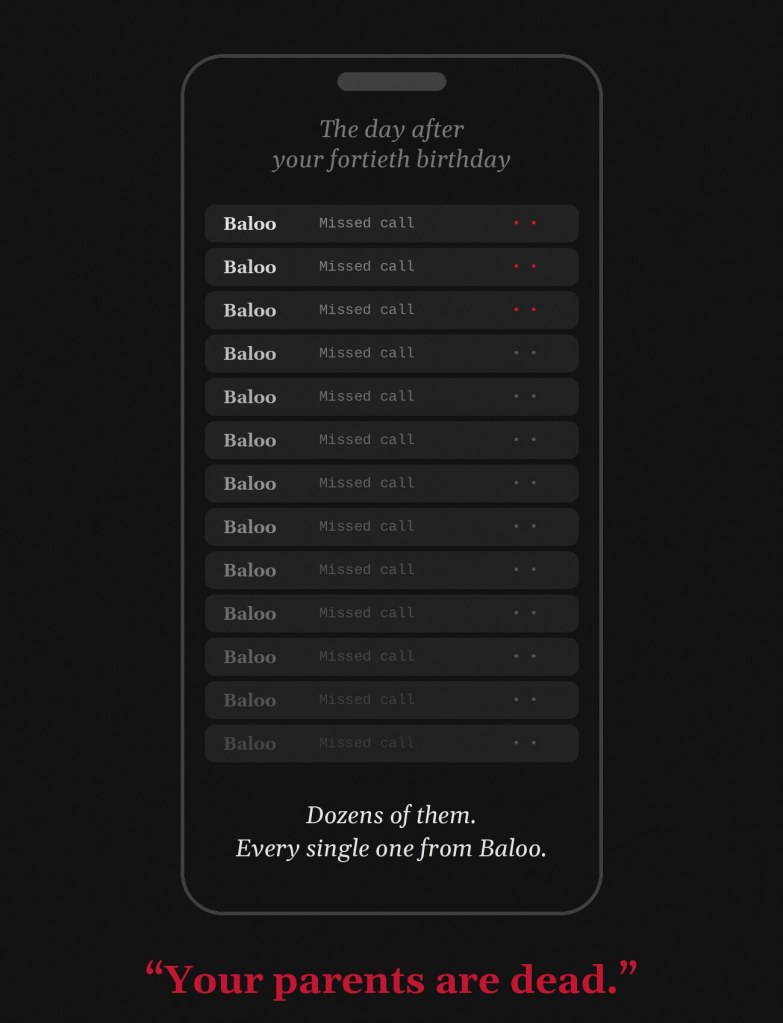
The day after my fortieth birthday, I woke up with one working eye and a body that had resigned from active service. My phone was crowded with missed calls. Dozens. Every single one from Baloo, a friend who never calls unless the world is on fire.
He said four words.
“Your parents are dead.”
And suddenly I was cold. Not the cold of a room with the window left open. The cold that comes from inside the bones.
Nobody tells you it will be an ordinary morning. Mine had a hangover in it.
2. You will be late
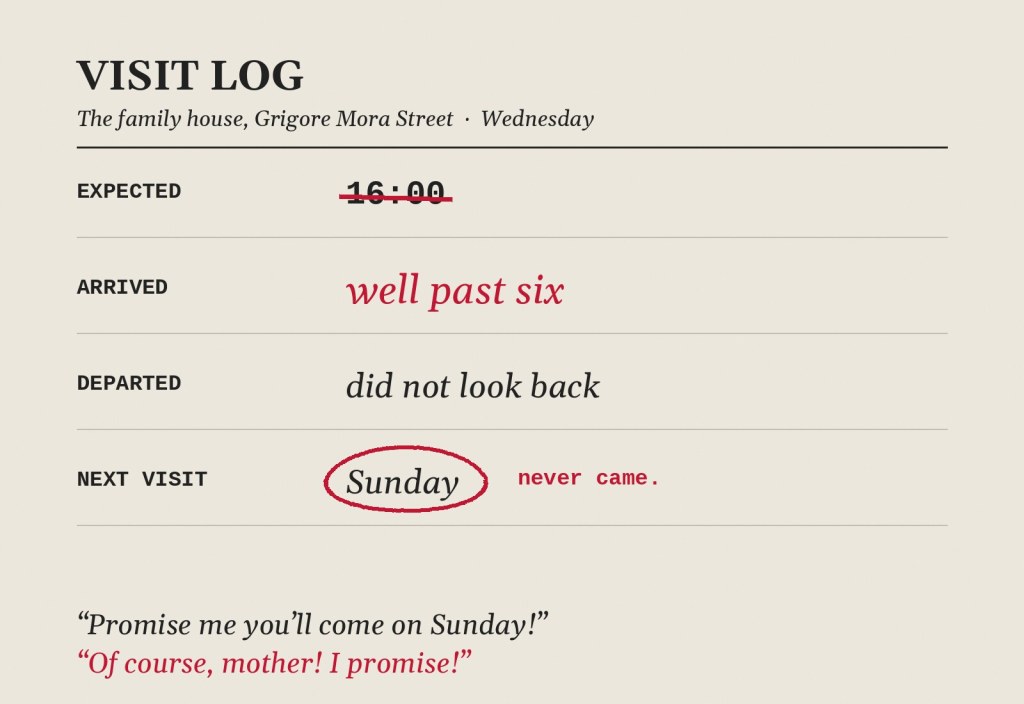
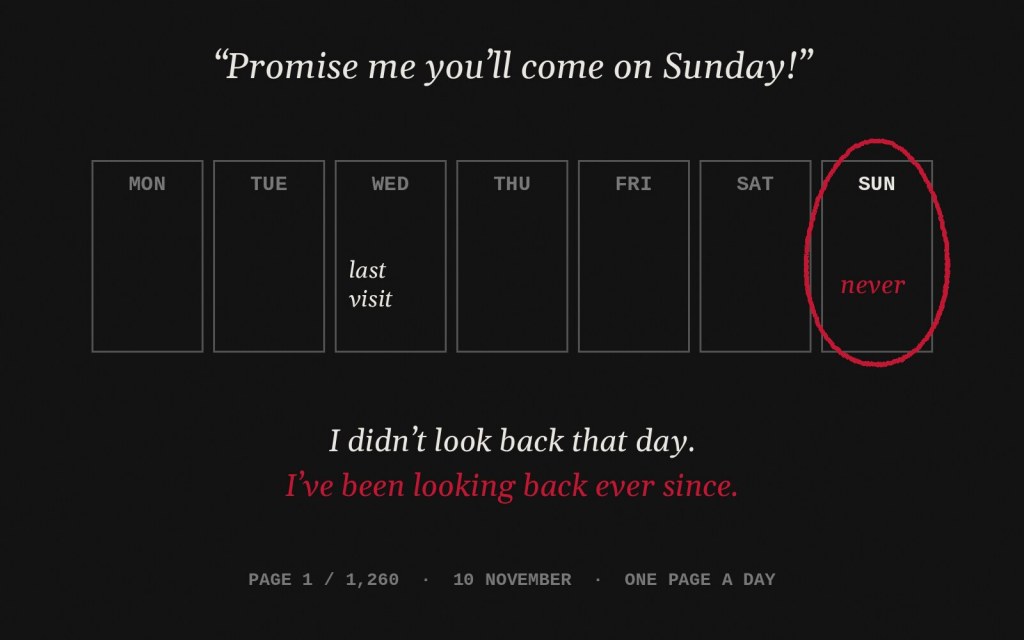
The last time I saw them was a Wednesday. I was supposed to be there at four. I arrived well past six. No excuse worth writing down.
When I left, my mother called after me:
“Promise me you’ll come on Sunday!”
“Of course, mother! I promise!”
I kept walking.
For some reason, I did not look back.
They never got to Sunday.
I didn’t look back that day. I’ve been looking back ever since.
3. They bet on you
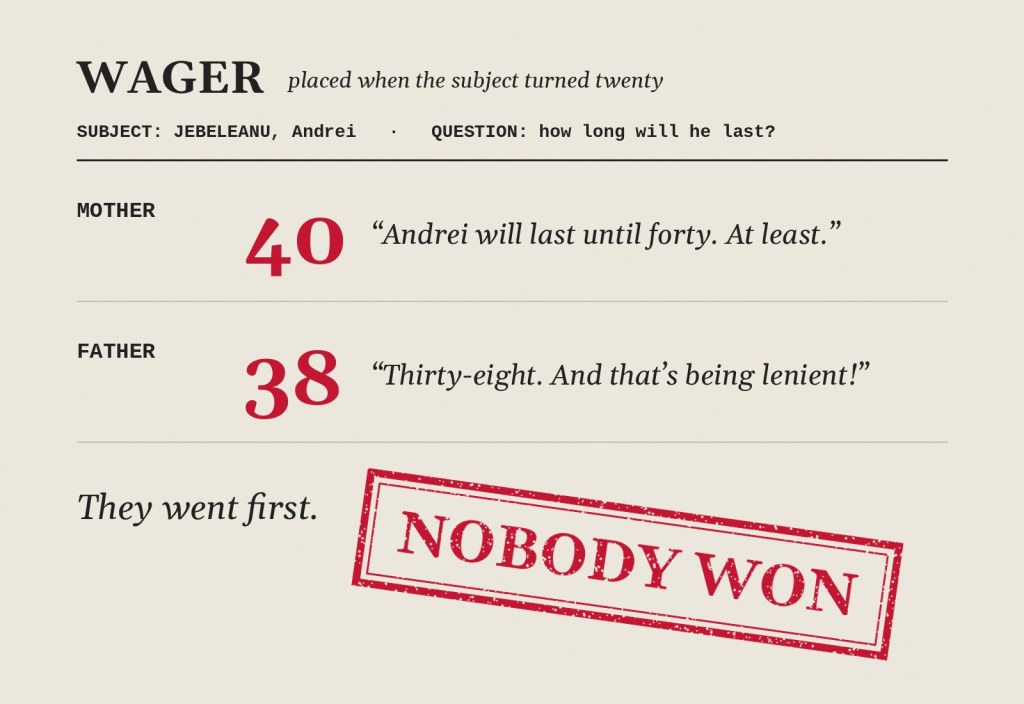
That same Wednesday, my father made a confession. When I was twenty, he and my mother had placed a bet on how long I would last. My mother: “Andrei will last until forty. At least.” My father: “Thirty-eight. And that’s being lenient!”
He lost. I was almost forty and still standing, ungrateful as ever.
It took me forty years to understand that it wasn’t a bet. It was the only way two very proper people knew how to say we are terrified of losing you.
In the end, neither of them won. They went first.
4. Money doesn’t teach you to arrive on time
I grew up in a house with two addresses and a courtyard the size of a hippodrome. My father wore a white rose in his waistcoat pocket. “Even the flower seemed to understand that, in my father’s presence, wilting would be an unforgivable lapse of manners.”
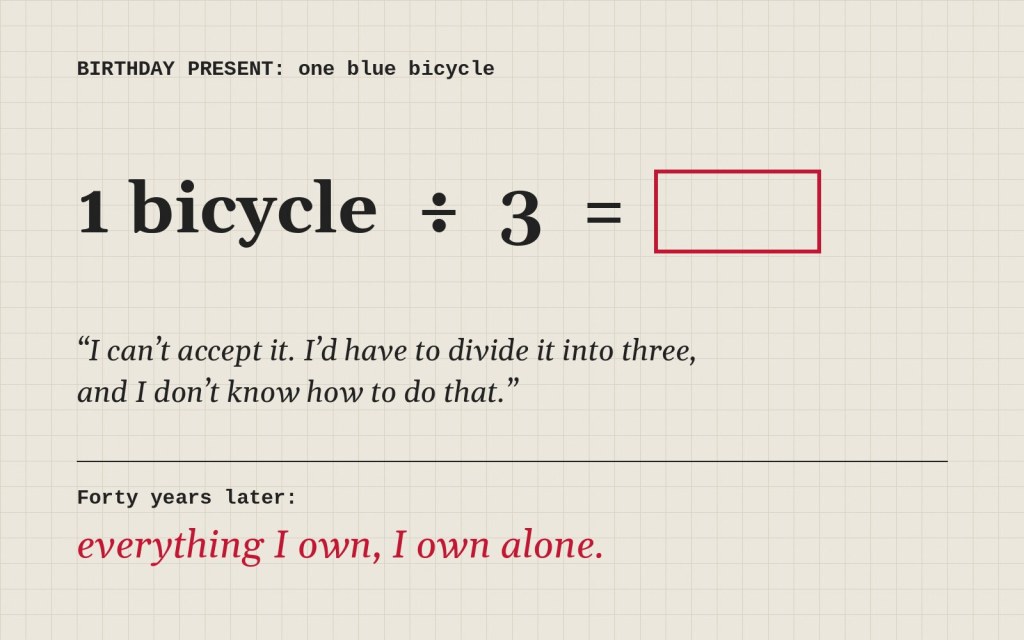
I was given everything a boy can be given. Once, for my birthday, a blue bicycle. I walked around it several times and refused it: “I can’t accept it. I’d have to divide it into three, and I don’t know how to do that.”
Forty years later, I still can’t do the division. Everything I own, I own alone.
5. Love doesn’t respect jurisdictions
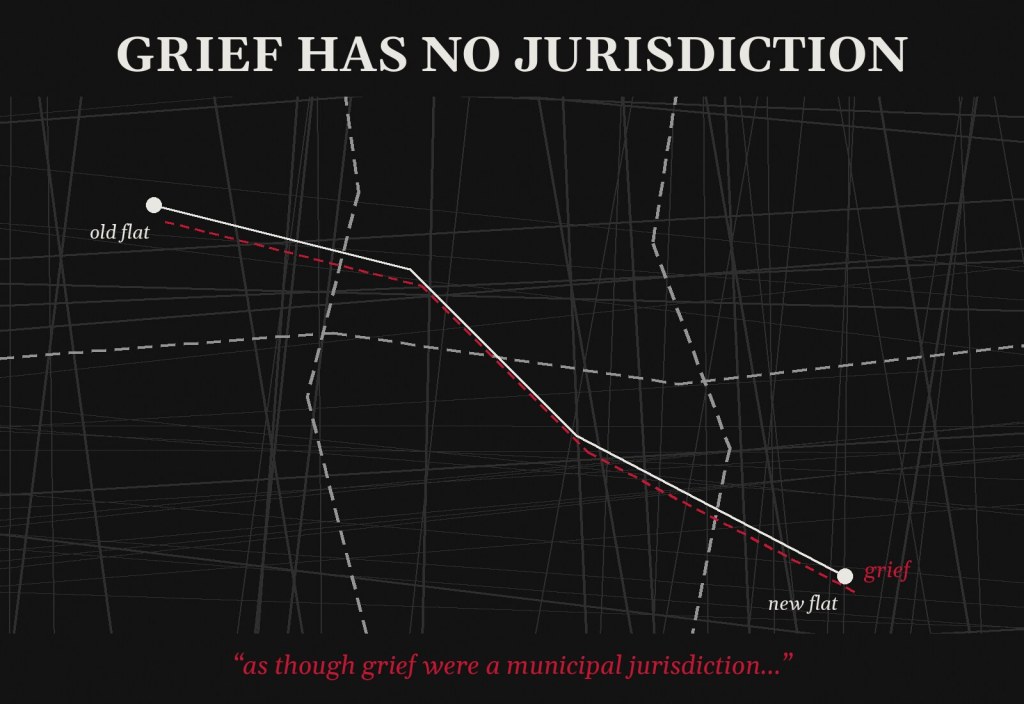
Twenty years ago, a woman named Dia designed the tattoo on my back and vanished. I burned her clothes. I sold the apartment. I moved to the other side of the city, “as though grief were a municipal jurisdiction and might lose the authority to pursue me across district boundaries.”
It didn’t work.
On the morning my parents died, she was the one who handed me the phone. “You’d better answer.”
Some people only come back when the worst is about to happen. I still don’t know whether that’s love or timing.
6. Pay someone to stop you
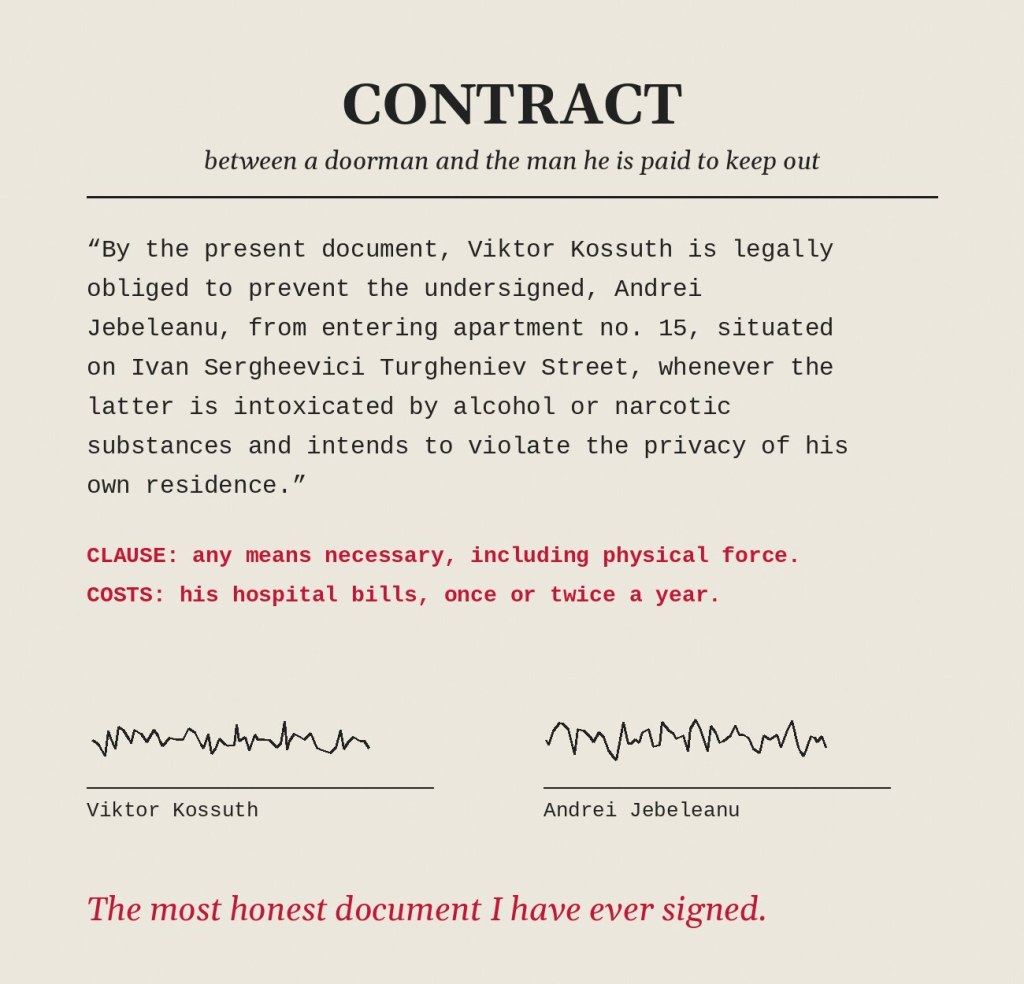
I have a written contract with Viktor, the doorman of my building. He is legally obliged to stop me from entering my own apartment whenever I’m drunk or high. He is authorised to use force. He does. Once or twice a year, I pay his hospital bills.
It’s the most honest document I’ve ever signed. Not because it works. Because it admits I need it.
Find the person who will stand in your doorway. Then pay their hospital bills.
7. Page 1
My parents didn’t come back as memories. They came back as weather in the body. “If I close my eyes, I see a color, my father’s, and feel an unnatural stillness, my mother’s.”
That’s why we’re doing it this way.
The deal
Starting 10 November, one page of The Apophatic Man a day, here, on Instagram and on TikTok. Not 1,260 pages in a weekend. One. I have never managed to live a single day at a time. I’d like to watch someone do it properly.
Page 1 is a lecture hall at nine in the morning. I’ll be at the lectern. And in the comments, getting real.
Homework
What did you promise someone and never get to keep? Tell me below. I’ll go first: Sunday.
— A.J.
Andrei Jebeleanu is the editor-in-chief at the center of The Apophatic Man, a novel by Marius Tianu. Volume I is out on 10 November. Pre-order it on Amazon →

