The Geometry of Inner Life · An empathy experiment
You make a joke. Someone’s expression changes. You meant no harm. What do you examine first: your intention, your tone, their reaction, or the possibility that you have misunderstood the whole encounter?
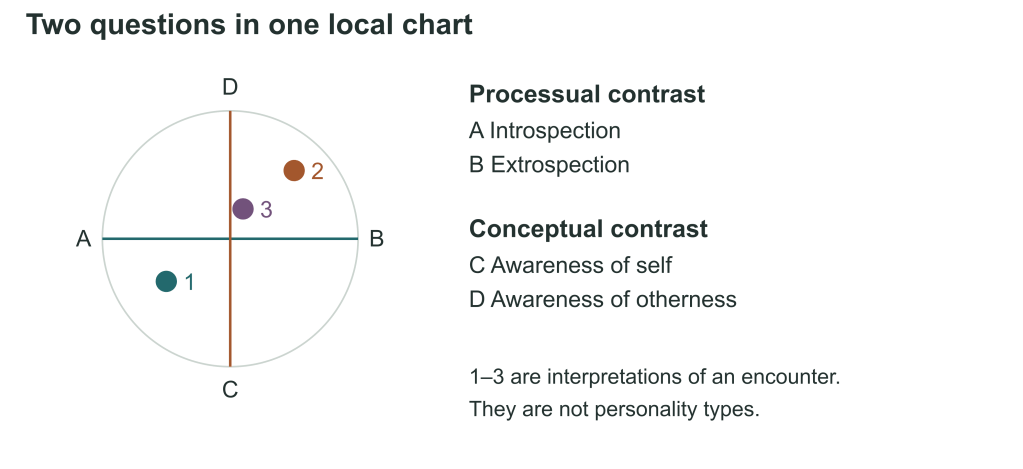
Try four short situations from our conceptual atlas. Each asks you to place a reading of the encounter between introspection and extrospection, consciousness of self and consciousness of otherness.
Enter the empathy experiment →
- Locate yourself. What do you examine first when another person seems hurt?
- Change perspective. What moves when you discover that you misread their reaction?
- Understand an adversary. Can you understand a vulnerability without wanting to relieve it?
- Find the boundary. What can you reasonably claim to know about another person’s experience?
Choose a reading, inspect its proposed position, and move the point if the placement does not convince you. You can add a reason or a reservation. The path records this exercise; it gives you no permanent personality type and no combined empathy score.
The last question asks about evidence and the limits of attribution. An observed expression, an imagined experience, and a justified understanding are different things. The experiment becomes interesting when you can explain why you moved.
Your answers remain in the page. At the end you can copy a reflection and an invitation to share wherever you choose.
When you return: which question made you reconsider your first reading? Tell us what changed, and why.
This is a philosophical exercise developed from the speculative atlas in The Apophatic Man. The positions and feedback are editorial interpretations, not a validated psychological assessment.

